How Coffee Cup Sleeves Work to Protect Hands From Heat
Hold a freshly poured coffee without a sleeve and count the seconds before your grip shifts. Most people last well under ten. The drink inside sits near 170 °F, and a thin paper cup wall passes that heat almost unfiltered. Understanding how coffee cup sleeves work explains why a few grams of plain board solve the whole problem completely. The short answer is trapped air, arranged cleverly around the cup. This guide walks through the physics, the materials, and the fit rules that decide whether a sleeve performs or slides off.
Why hot cups feel uncomfortable
The problem is worth stating precisely before solving it. Hands and hot liquid disagree by about a hundred degrees.
Skin reports pain well before it burns, and hot drinks sit squarely in that warning zone. Brewed coffee and tea serve between 160 and 185 °F across most US counters.
A single-wall paper cup is thin by deliberate design, keeping cost and weight down. Heat conducts through that thin wall in seconds, and the outside surface approaches the drink’s own temperature. Fingers can only tolerate brief contact, which is why people shuffle their grip constantly. Nobody enjoys a drink they have to juggle. The discomfort peaks in the first minutes after pouring, exactly when the customer carries the cup away.
How coffee cup sleeves work against heat transfer
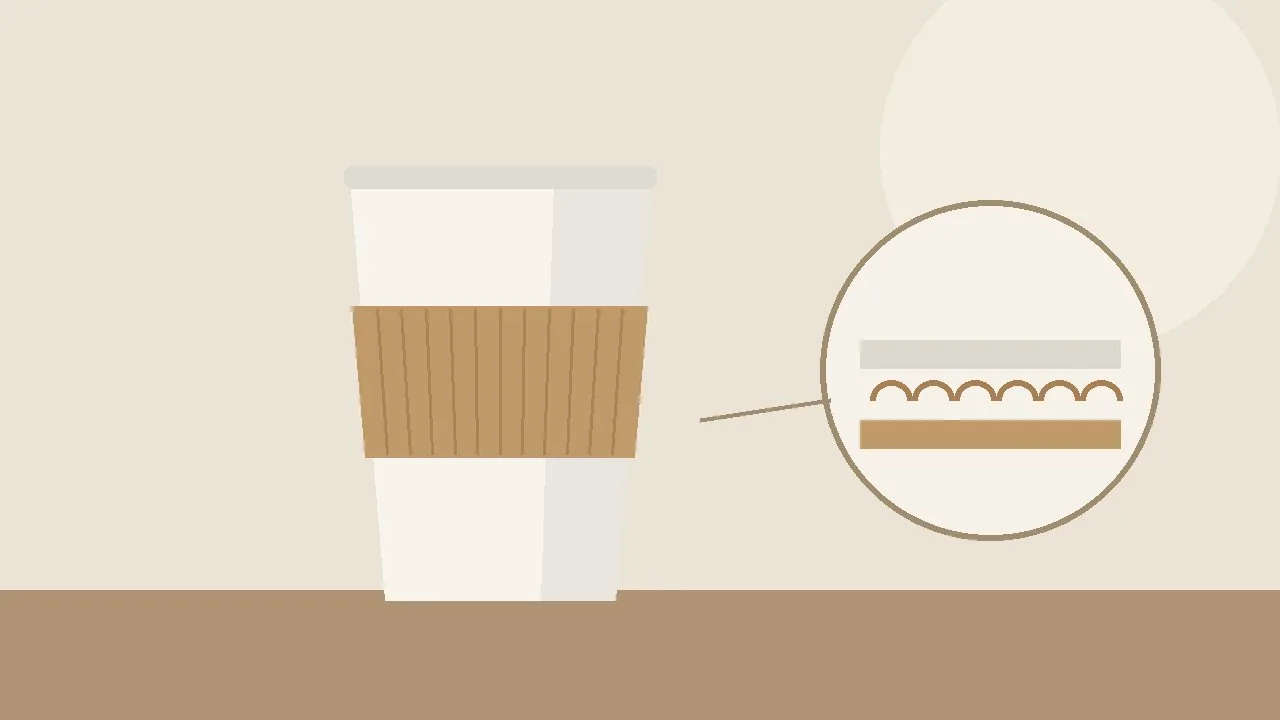
A sleeve interrupts the heat’s path with the worst conductor available cheaply, which is still air. Heat leaving the drink must cross the cup wall, then an air layer, then the sleeve board.
Each boundary sheds a share of the energy, and the hand feels the sum of those losses. The sleeve’s outer face can sit dramatically cooler than the cup wall it covers directly. Standard cardboard coffee sleeve stock does this with no exotic materials at all. Board, still air, and simple geometry do the entire job. The very same barrier works in reverse for iced drinks, keeping condensation off fingers and hand warmth out of the cup.
Corrugation and air gaps
Air needs architecture to stay useful. Corrugation is that architecture, borrowed from the shipping industry and shrunk to fit a palm.
Corrugated sleeves make the air layer structural. A fluted middle layer, the same arched geometry used in shipping boxes, holds hundreds of small air channels against the cup.
Those channels stay put no matter how firmly the customer grips the band. Flat sleeves rely on looser contact for their air gap, which finger pressure can close entirely. Fluted corrugated coffee sleeve builds keep their insulation under a squeeze, which is why they dominate hot service. Flute size tunes the feel in the hand, with fine flutes giving a smoother band and coarse flutes giving more cushion. Embossed sleeves take a third route, pressing small dimples into flat board to create standoff bumps. All three approaches trade slightly different comfort against cost.
Material and thickness
The board itself contributes more than it gets credit for. Fiber is an insulator before any flute is formed.
Board choice layers onto the geometry. Thicker board insulates more on its own and adds stiffness the flutes can lean on.
Most sleeves use recycled-content kraft board in the lightweight range. The material arrives with insulation already built into its fiber structure, tiny air pockets trapped between pressed fibers. Darker roasts of board, so to speak, exist for premium lines, with heavier stocks and double-layer builds. General hot beverage sleeve formats cover tea, cider, and cocoa service with the same construction logic. Coatings change the grip and print surface but barely touch insulation, which stays the job of air and fiber.
Grip and fit on the cup
A perfectly insulated sleeve in the wrong size protects nobody. Fit turns good materials into a working product.
Insulation fails if the sleeve slides, so fit is part of the thermal system. A sleeve grips a tapered cup by matching its cone angle at the band’s height.
The fit rules compress into a short list:
- The sleeve should stay put when the cup is lifted by the band alone
- A correct fit slides on with light resistance, never forced
- The band should sit over the natural grip zone, mid-cup
- Too loose means the hand meets hot wall through the gap
- Too tight means slow service and torn seams at the counter
Textured interiors and slight waffling improve grip without changing the size. Always test fit with filled cups, since heat softens board and changes the friction slightly during service.
When double cupping is unnecessary
Some counters solve heat with a second cup instead. The comparison deserves a paragraph because it costs real money daily.
The sleeve’s quiet rival is the second cup. Double cupping insulates too, at double the cup cost and double the waste.
A sleeve delivers comparable comfort for a small fraction of the material. The math favors sleeves at any service volume, which is why chains standardized on them decades ago. Double cupping persists mainly where sleeves run out mid-rush, which is an ordering problem rather than a thermal one. Insulated double-wall cups solve the same problem a third way, at higher unit cost on every drink poured. For standard single-wall service, the sleeve remains the cheapest comfort per cup ever devised.
Waste math strengthens the case further. One sleeve weighs a fraction of one cup, and it recycles cleanly as plain paper. Counters tracking waste per order see the difference within a week of switching.
Choosing a sleeve for your cups
The physics settle into a short shopping list once understood. Construction first, then size, then a real-world test.
Selection comes down to matching construction and size to your cups and drinks. The sequence below takes one delivery cycle to complete.
- List all your hot cup sizes and their real serving temperatures.
- Pick corrugated for maximum insulation or embossed for a smoother band.
- Match each sleeve’s stated size range to your cup diameters.
- Order physical samples and fit them on filled cups at service heat.
- Hand test with counter staff for one shift and collect complaints.
- Confirm the print options and case counts before the wholesale order.
Sleeves in the cup sleeves for hot drinks range publish their cup compatibility per format, which shortens step three considerably. When your full cup list is ready, send it over with your monthly volumes for a quote. We will match the sleeve constructions to how coffee cup sleeves work hardest in your own service, with samples included for your hand test.